













About Sudoku
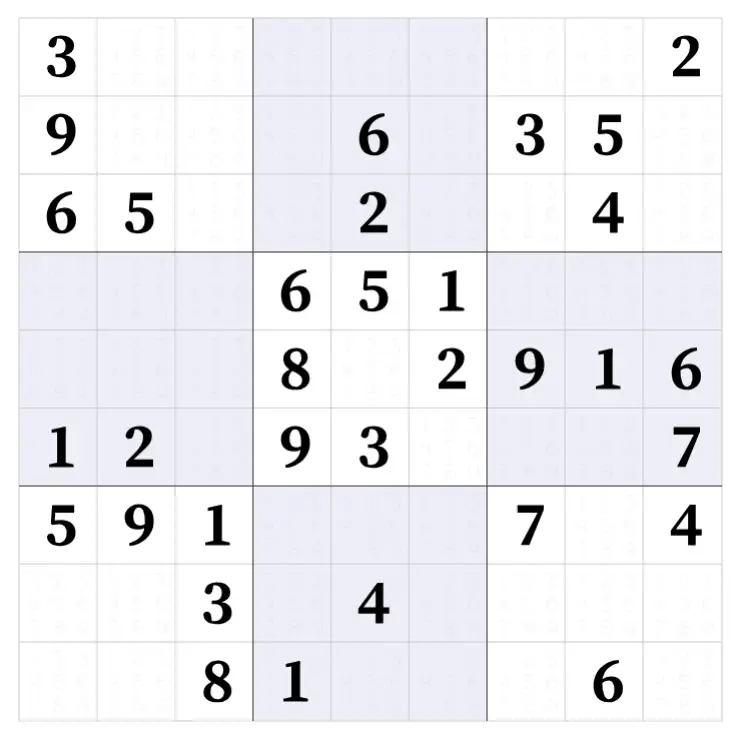
Sudoku fills a 9x9 grid by deduction rather than calculation. Every row, column and 3x3 box must contain the digits 1 through 9 exactly once.
Numbers are clues, not arithmetic. Check rows, columns and 3x3 boxes to eliminate impossible digits, then use small notes to remember candidates in the harder sections.
How to Play Sudoku
Choose a difficulty.
Fill empty cells with 1 through 9.
Fill obvious single candidates before working on speculative cells.
Use notes when narrowing candidates and complete the grid.
Controls
| Action | Control |
|---|---|
| Select cell | Mouse click / arrow keys |
| Enter number | Number keys 1–9 |
| Notes | Notes button |
Sudoku Tips & Tricks
Start with almost-complete rows and boxes. A number that fits only one position in a box is a strong next move.
Eliminate candidates using both row and column.
Find hidden singles in a 3x3 region.
Keep pencil notes up to date.
Check the entire grid before resorting to guesses.
Frequently Asked Questions
How many cells are in the grid?
Eighty-one, arranged nine by nine.
What must each box contain?
The digits one through nine without repetition.
Do I need arithmetic?
No. The puzzle uses logical placement.
What does Notes do?
It records possible digits without fixing a final answer.
Can a digit repeat in different boxes?
Yes, as long as its row, column and 3x3 box remain valid.
What is a hidden single?
A digit that has only one possible position in a region.
Why use Notes before choosing?
They help you track candidates without committing to a wrong number.